

Common Data Environment (CDE)
Analysis and selection
A Common Data Environment (CDE) is a software tool that allows the different agents involved in a construction project (client, architect, engineer or builder) to collaborate in an interconnected and coordinated way. In a CDE it is possible to collect, manage and disseminate information and data between different teams in a safe, clear and controlled way, which is essential for the development of BIM projects.
The Client must establish the Common Data Environment
ISO 19650 is the international standard for managing BIM information throughout the life cycle of an asset. This regulation establishes that the client, as the ultimate recipient of the information, is responsible for providing the CDE and the procedures to be followed by the other participants in the project when sharing information among them.
The CDEs follow the project’s structure
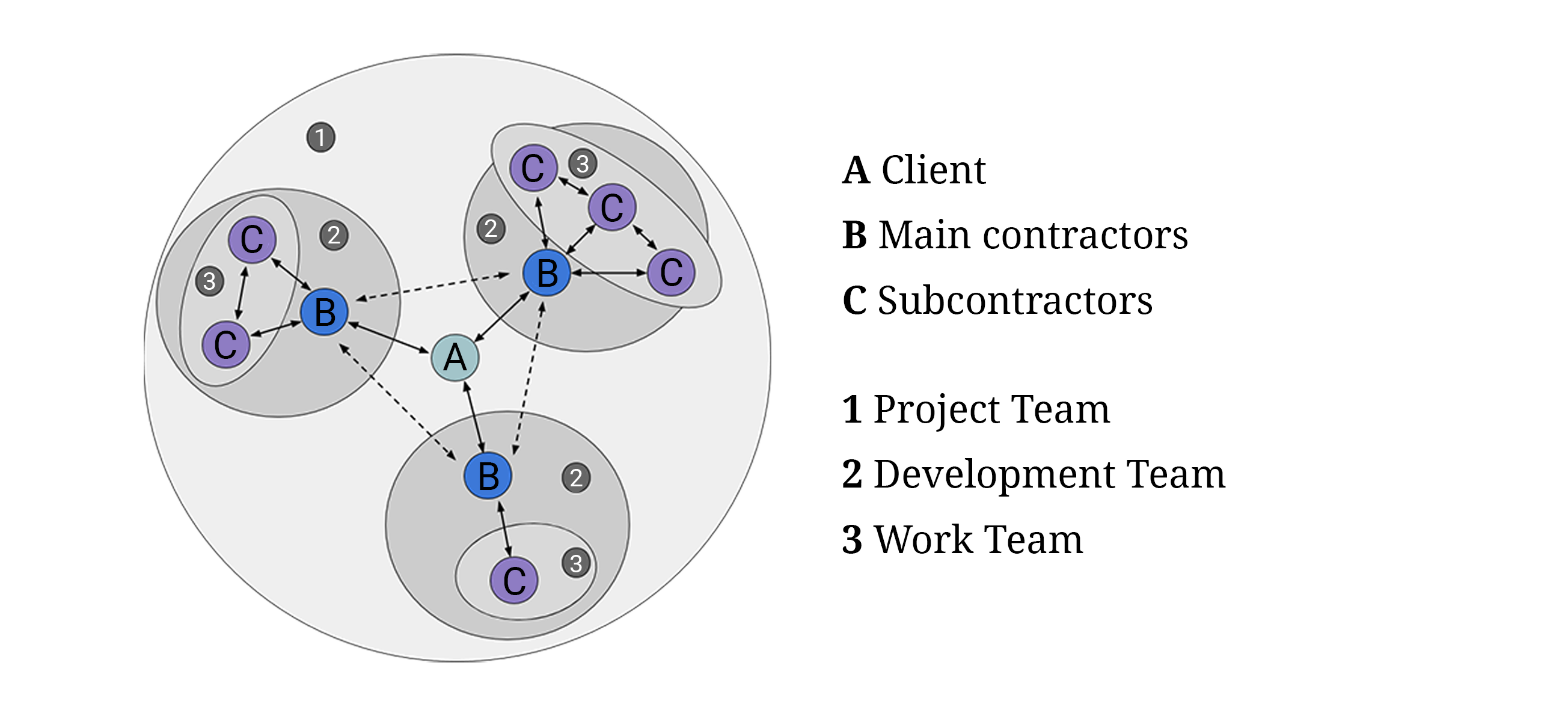
The standard structure of a project can be understood with the following image: We have the client in the center of the project (A) as the one in charge of hiring the different main contractors (B), who will be in charge of the different phases: design, construction or maintenance. In turn, contractors usually have other subcontractors (C) responsible for more specific tasks: air conditioning specialist, landscaping, lighting.
The client is responsible for establishing the CDE in which the main contracting parties will share information with him. However, the main contractors may choose other means of sharing information with their subcontractors.
The client must decide what level of supervision he requires over the project information
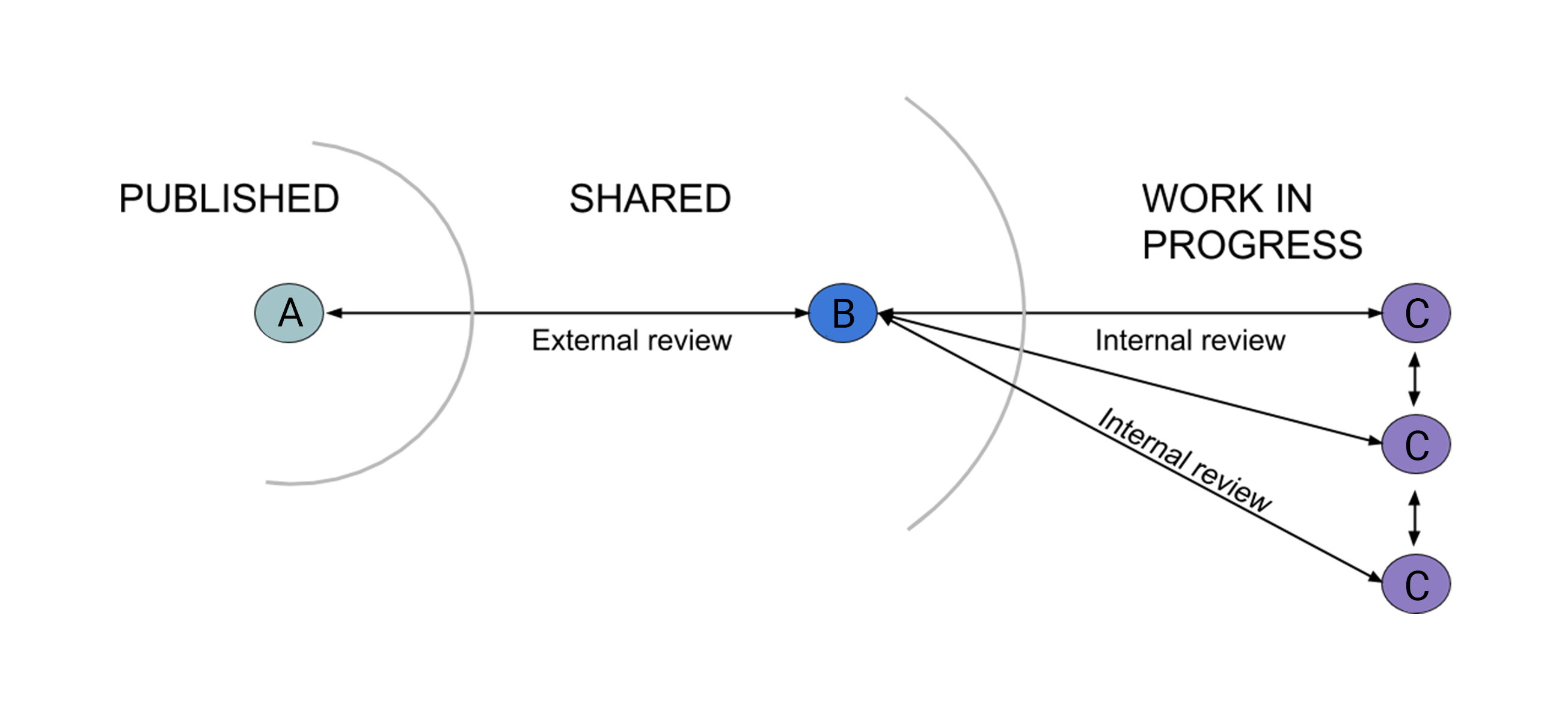
One of the first decisions to be made, and which may influence the choice of the CDE, is to determine the level of information that the Client wants to access or influence on an ongoing basis and which is related to the level of maturity of the BIM information being exchanged.
The first level corresponds to the information reviewed, validated and published to meet the milestones and requirements of the project. This information, with the maximum level of maturity, should always be shared through the CDE established by the client to which all development teams would have access.
The next level corresponds to the information that the development teams share internally and with the client to develop their scope before publishing it to meet the project’s milestones. The shared information is used by the different contractors to coordinate with each other, in a more or less interactive process that must be actively managed by each main contractor. The client should choose whether it is interested in monitoring and accessing data (BIM and non-BIM) from that process of sharing and periodic review or if it prefers to be limited to receiving information that is reviewed and published.
The third and deepest level corresponds to the information that each subcontractor team handles on a daily basis for its work in progress. That information is usually handled locally or privately for each party before it is shared, this level would be the work files before they are shared with the rest of the contractors or client.
Finally, regardless of the level of control and maturity of the information shared within the project team, there must always be the possibility of archiving and storing information that has become obsolete by other, more accurate information. That is, the files will be stored in a version repository to have control over what has been done in the different phases of the project.
CDE’s allow for controlled access and display of information
Within the CDE each organization must be able to control what information is accessible by specifying equipment and users, working with directories, document types, statuses and applications. In addition, modern CDEs allow working with information packages, deliveries, versions and metadata for complete document control.
Coordination and incident management should be done at the CDE
The CDE must favour the coordination of the project, and can serve as a platform for the identification, discussion and resolution of incidents between the teams involved. Having a follow-up of the issues without losing the traceability.
Modern CDEs offer the creation, assignment and monitoring of issues, with filters, access levels and attached documents. There are certain platforms specifically dedicated to incident management that serve as a link between the checking and editing platforms.
The CDE allows to see and understand the project in 3D
Not all companies need to have the knowledge or licenses to access the graphic information of BIM. That’s why modern CDEs offer a viewer that allows anyone to access the information through a web platform, without the need to have the same software with which they have been generated.
Most viewers include tools to extract measurements, visualize element properties, make cuts or switch between 3D and 2D views. It is highly recommended that this visualizer of models/plans can be accessed through a Tablet or cell phone in a simple and intuitive way.
The CDE must allow working with OpenBIM data
Open BIM is the stream in which teams share information using an open and standardized format for project representation (Industry Foundation Classes or IFC) and communication (BIM Collaboration Format or BCF) regardless of the platforms with which they have been created.
The customer should consider supporting OpenBIM practices in their CDE even if they have chosen to work with proprietary or closed applications for other reasons. This ensures future interoperability and access and allows to incorporate different technologies that may be of interest.
Pricing, Licensing and Security
The price usually depends on the number of projects and users, as well as the contracted functionalities. It is best to contact the sales person of one of these platforms to see the options that best suit our needs.
The information’s storage location and its legislation can also be aspects to consider in relation to its security and to the treatment of intellectual property and personal data, especially since the entrance into force of the European directive GDPR.
Most popular CDEs
These are some of the most popular Common Data Environments:
The choice of a CDE is an important milestone for any company as it will be there for the duration of the project. It will be the place of exchanging information with other companies and will be used on a daily basis by the team members. For this reason it is recommended to incorporate a training program to get the most value out of it.
The choice of our CDE must be taken very carefully, since once the team is adapted to work with a tool, changing it for another one has a high replacement cost.
These are the aspects to take into account when choosing our CDE:
Bibliography
UK BIM Framework (BSI.,CDBB, UKBIM Alliance). (2019 October). Information management according to BS EN ISO 19650 Guidance Part 2: Processes for Project Delivery. (ed2). https://www.ukbimframework.org/
Author: Fermín Guerrero