

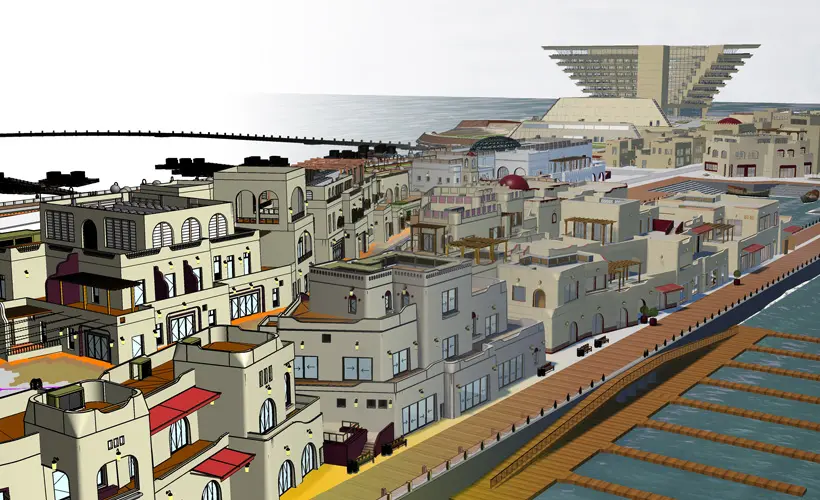
Hospitality
Digital management of hospitality projects and assets to increase profitability and enhance customer experience
Industry Challenge
In the hospitality industry, various stakeholders are involved from the design of a hotel to its operation. Investors, owners, operators, and hotel groups must manage their business with the available asset information.
This information is often incomplete, scattered, and outdated. Let’s look at some cases:
Investors and owners seek to maximize the use of available space during the design phase. This requirement is communicated to the design team, who study a limited number of configurations, more or less reduced depending on the complexity and available resources.
On the other hand, operators must manage maintenance campaigns or take the risk of losses associated with downtime. With the added complication that breakdowns occur when equipment is most in use, which is generally during peak seasons.
As a final example, hotel groups must not only ensure the profitability of their hotel portfolio but also assess the profitability of new franchisees and provide confidence to investors.
Current technologies applied to the built environment, and Building Information Modeling (BIM) methodology in particular, are helpful for the challenges faced by the hospitality industry.
Thanks to these tools, we can, among other benefits, automate part of the design to optimize building configuration, link As-Built project information to the maintenance system, visualize assets clearly and updatedly, communicate business data in the building context, or generate a virtual reality environment for mockup evaluations or renovations.
Finally, the use of BIM technologies and digital twins allows capturing the necessary data and providing it to each stakeholder from a single and reliable data source.
Modelical assists investors, owners, operators, and hotel groups in establishing the appropriate digital strategy so they can improve control over their projects and assets. We help them integrate BIM and equip themselves with accessible and updated information for their business.
-
Smart coordination
We make your BIM models talk to each other and adjust accordingly with automations and smart processes.
-
QTO from BIM
We help you get the bill of quantities of multiple models at the same time and directly from BIM.
-
360 images on site
We help you take control and document the advance of a construction with our product DejaVu.
Our services
New hotel development: design, construction, and comprehensive renovation of existing buildings.
- Digitization of existing buildings through 3D laser scanning, photogrammetry of existing assets, and 360-degree photography.
- BIM management in all project phases.
- Quality control, Quantity take-offs, deadlines, and tracking of client-specific KPIs.
- Coordination and complete audits of the BIM model in each project phase.
- Virtual reality to enhance the customer experience.

In operation hotels:
- Development of As-built models and integration with computerized maintenance management systems (CMMS).
- Creation of digital twins and integration with building management systems (BMS).

Hotel groups:
- Development of specific dashboards to have a comprehensive real-time and aggregated view of your asset portfolios.
- Development of customized use cases.
- Development of protocols, guidelines, and BIM templates for managing franchisees.
- Software development.
- Training at all levels of the company according to user needs and project phases.

Our approach
We collaborate with leading companies across the hospitality, leisure, real estate, and retail industries worldwide. We carry out comprehensive projects for the digitization, integration, and exploitation of information for asset portfolios. For each project, we create specific working teams composed of architects, engineers, developers, and industry specialists.


Our people
-

Lucía Muñoz
Architect - BuiltTech Specialist
-
Begoña Gassó
Architect - Head of Product Management
-
Óscar Herrero
Architect - BuiltTech Specialist
-
Alberto Ramos
Architect - Practice Manager - Asset Management


Latest insights
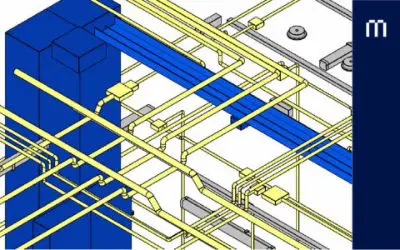
Electrical Modelling
The objectives of this guideline are to achieve a deep understanding of electrical distribution families, to create switch and power-lightin...
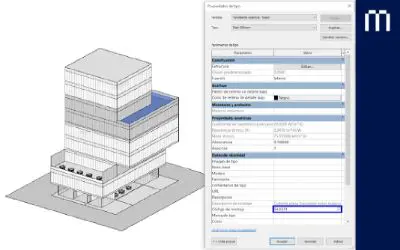
Keynote and Assembly Code
In Revit, there are system parameters that allow us to enter values in a model’s families and link them to an external classification syst...
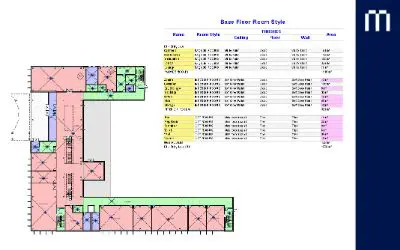
Model Schedules
A BIM model is a database. Each element that constitutes the model is defined through data. Some of this data regards the element’s geomet...
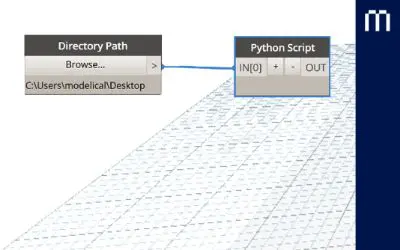
Exporting a multi-site model to IFC
Exporting models to IFC format is needed to consume them outside the Revit environment. IFC models are commonly used for clash detection, de...
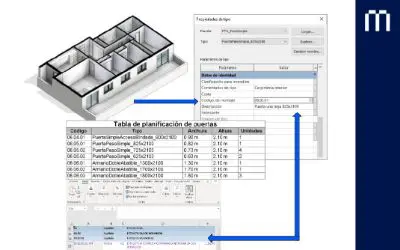
How to perform Quantity Take-Off in a BIM project
A BIM model is a container of information that we can also use to do quantity take-off as long as it is properly set up for it. We are talki...

IFC4 based automations for Verde
Given the model of a building in IFC4 format, automate the computation of two Verde indicators with an open standard, cost free and vendor-n...
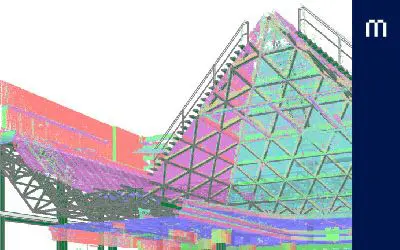
Automatic modeling from point clouds
It is very difficult for automatic/semi-automatic modeling to reason constructively as a human would. Where it can help us is with repetitiv...