

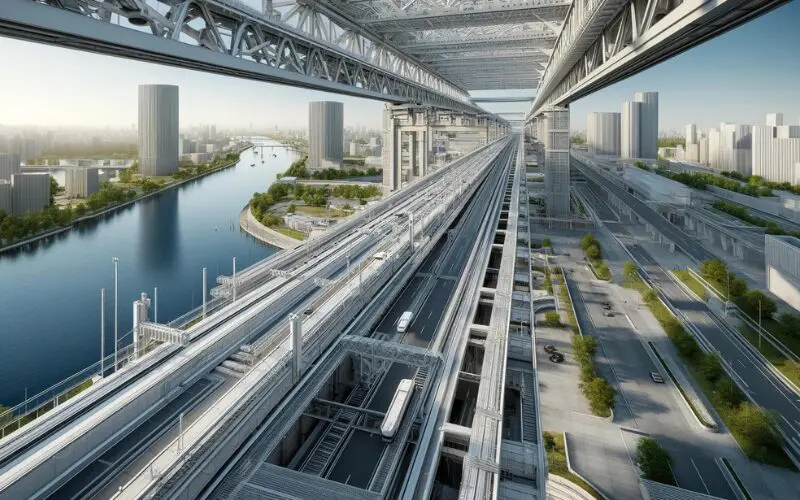
Cities
Accurate and exploitable data on urban assets to create more sustainable, livable, and resilient cities.
Industry Challenge
The development of cities presents multiple challenges for public entities, investors, and developers. They all seek the best solutions to create urban areas capable of accompanying population growth, ensuring smooth mobility, and adapting to climate change. They need to align their efforts to create sustainable, livable, and resilient cities.
To achieve this, they need to work with accurate and accessible data on the built urban environment. In this context, numerous cities have already adopted technologies such as BIM and digital twins. These technologies allow them to work with 3D digital models of the built environment and access a single, reliable data source to support their decisions.
However, city leaders and authorities do not always have the dedicated teams to properly obtain and maintain information on the built environment. They will need support from external organizations but must have defined their information requirements to maintain data consistency.
At Modelical, we help public entities develop a consistent strategy for digitizing and managing information on the built urban environment. To do this, we combine our experience in BIM and digitization for large urban projects with our specialization in digital twins.
-
BIM strategy
We help you successfully adopt and utilise BIM technologies and processes.
-
Digital twins
Streamline the management, operation and maintenance of your assets.
-
Optimization
Take advantage of interoperability linking your databases to the Digital Twin
Our services
For your entity:
- BIM and digital solutions implementation
- Training

For new projects or urban landscape remodeling:
- BIM requirements definition for tenders
- BIM management in all project phases: including coordination and comprehensive model audits
- Virtual reality to improve the citizen experience

For the existing environment:
- Digitalization strategy
- Digitization of existing urban areas through 3D laser scanning, photogrammetry of existing assets, and 360-degree photography

Digital Twins Development:
- Data model definition
- Requirement definition
- Use case definition
- Technology selection
- Protocol development
- Creation of digital twins

Our approach
At Modelical, we have been supporting urban development since 2012. Our portfolio includes roads, railways, wastewater treatment plants, airports or ports, data centers, real estate development projects, among others. Currently, we are involved in various urban projects and collaborate as:
- BIM implementation partner and BIM technical office for the construction of the new Île-aux-Tourtes Bridge in Montreal
- BIM technical office for the CREA MADRID NUEVO NORTE urban redevelopment project
- Partner for the development of a new environment and digital twin for leading companies in the energy and telecommunications sectors
For these projects, we create specific teams composed of civil engineers, architects, and developers. We employ a personalized methodology to ensure optimal collaboration with client teams, as well as their partners and IT service providers.
Our customers

















Our people
-

Roberto Molinos
Architect - Managing Director
-
Sarai Zaballa
Architect - Operations Director - Partner
-
Juan Manuel Pérez
Software Engineer - Technology Director - Partner
-
Cecilia Santana
Architect - Head of Project Management
-
Rubén López
Architect - BuiltTech Specialist
-
Francisco Tabanera
Architect - Technical Leader - Partner
-
Alberto Ramos
Architect - Practice Manager - Asset Management
-
Lucía Muñoz
Architect - BuiltTech Specialist
-
Mario Roldán
Architect - BuiltTech Specialist
-
Javier Giménez
Civil Engineer - BuiltTech Specialist
-
Begoña Gassó
Architect - Head of Product Management
-
Adrián Sanz
Construction Engineer - BuiltTech Specialist
-
Julio Garcia
Construction Engineer - BuiltTech Specialist
-
Bruno Castillon
Civil Engineer - BuiltTech Specialist
-
Andrés Antolín
Architect - BuiltTech Specialist
-
Andreu Cortada
Architect - Practice Manager - Project Delivery












Latest insights
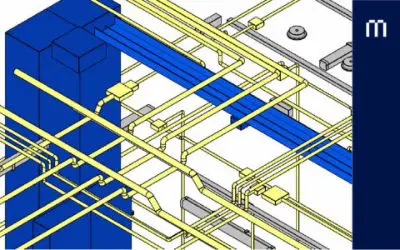
Electrical Modelling
The objectives of this guideline are to achieve a deep understanding of electrical distribution families, to create switch and power-lightin...
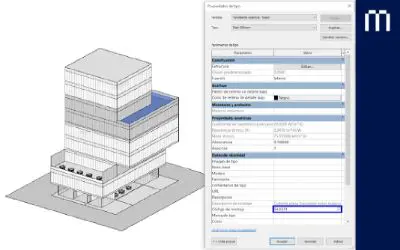
Keynote and Assembly Code
In Revit, there are system parameters that allow us to enter values in a model’s families and link them to an external classification syst...
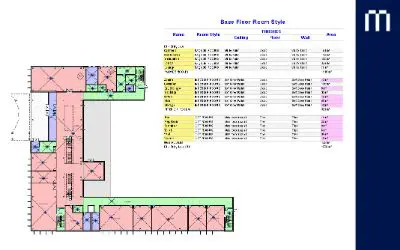
Model Schedules
A BIM model is a database. Each element that constitutes the model is defined through data. Some of this data regards the element’s geomet...
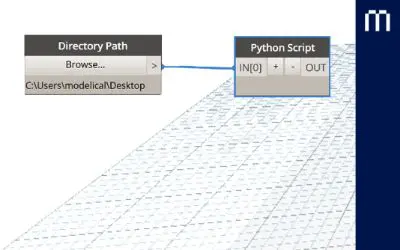
Exporting a multi-site model to IFC
Exporting models to IFC format is needed to consume them outside the Revit environment. IFC models are commonly used for clash detection, de...
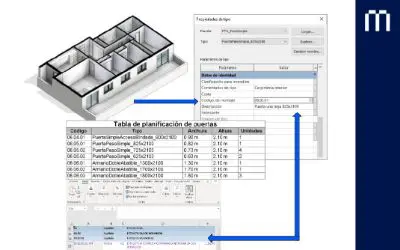
How to perform Quantity Take-Off in a BIM project
A BIM model is a container of information that we can also use to do quantity take-off as long as it is properly set up for it. We are talki...

IFC4 based automations for Verde
Given the model of a building in IFC4 format, automate the computation of two Verde indicators with an open standard, cost free and vendor-n...
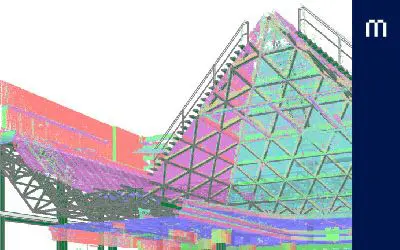
Automatic modeling from point clouds
It is very difficult for automatic/semi-automatic modeling to reason constructively as a human would. Where it can help us is with repetitiv...