

Start with Strategy, Not with Your BIM Object Catalogue
Are you a manufacturer of construction products or systems? If so, do not rush to digitalise your products in BIM.
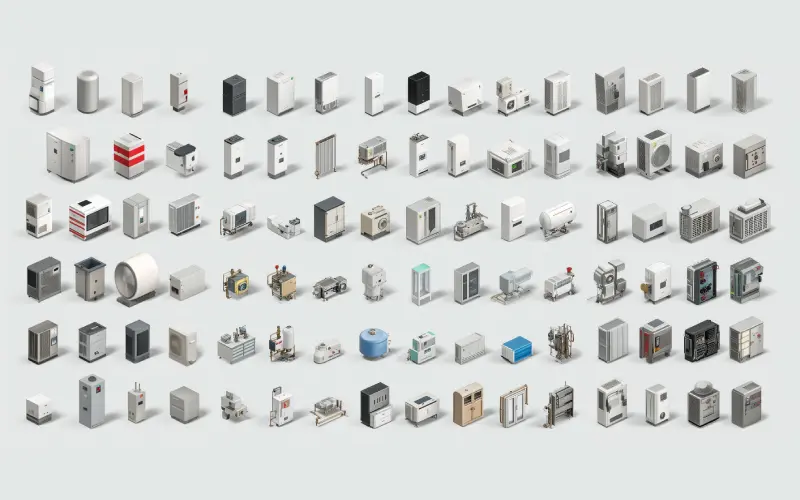
Architects, engineers and construction firms are increasingly turning to digital environments that support design, coordination and project execution with greater accuracy and quality.
In this context, many manufacturers of construction products and systems feel the pressure — or the temptation — to join the BIM ecosystem quickly. However, digitalising products without a clear strategy can become a costly mistake.
The Mistake of Starting at the End
Turning a product catalogue into BIM format should not be the first step.
Far too often, manufacturers invest in developing BIM objects (three-dimensional models containing technical and commercial information) without fully understanding who will use them, for what purpose or at what stage of the project lifecycle they will be relevant. The result is always the same: attractive but useless objects that remain stored on a corporate website, generating no downloads, never fitting into real workflows and ultimately adding no value to the business.
Creating a BIM object is not simply about modelling in 3D and placing your logo alongside a technical datasheet. It is a much deeper process — one that requires strategy, context and purpose.
The Questions Every Manufacturer Should Consider Before Digitalising
Before stepping into BIM digitalisation, it is essential to pause and reflect on several key aspects:
- At which project stage is your product relevant? Not all products play a role during conceptual design. Some require higher geometric detail and technical information for construction, maintenance or even decommissioning stages. Understanding this is crucial for deciding what information a BIM object should include and how it should be integrated into workflows.
- What information does the professional actually need? Including too much information can overload the model and make it inefficient; too little, and it becomes irrelevant. It is essential to identify which data each user profile truly requires (architect, engineer, contractor, facility manager, etc.) and to structure it in a practical and meaningful way.
- Which BIM software do your clients use? Not all professionals work with the same platform. Revit, Archicad, Allplan and Tekla each have different standards, data structures and levels of interoperability. Understanding which tools dominate your target market will inform the formats you should invest in and how to optimise compatibility.
- Who will maintain your digital objects? Digitalisation does not end when the files are delivered. Products evolve: technical specifications change, certifications are updated and availability shifts. Without a clear plan for updates and maintenance, BIM objects quickly become outdated, losing credibility with users.
- How will you measure your return on investment (ROI)? Digitalisation is not an end in itself — it is a means. Before investing, define how you will assess impact: number of downloads, increase in specifications, presence in clients’ BIM projects or improvements in brand perception.
From Impulsive Digitalisation to a BIM Strategy
The value of BIM does not lie in having objects – it lies in having a BIM strategy aligned with your commercial objectives.
A well-defined strategy allows manufacturers to identify the use cases where their products deliver the greatest value, adapt to industry standards and strengthen relationships with the professionals who specify their solutions.
From my perspective, a structured approach should include:
- Defining a BIM strategy aligned with commercial goals. This is not about “doing BIM because everyone else is doing it”, but about understanding how BIM can help you sell more, communicate better or position your brand in higher-value projects.
- Establishing the right use cases. Analyse at which project stages (design, tender, construction, maintenance) your product has the greatest impact, and how it should be represented digitally in each scenario.
- Ensuring interoperability and long-term maintenance. Standards evolve, software changes and market needs shift. Designing with a long-term view ensures your BIM objects remain useful and compatible over time.
Conclusion: BIM as Strategy, Not as a Trend
Digitalising products in BIM can be a profitable investment when done with a clear, value-driven strategy. Without that, it becomes an expense that generates frustration for both manufacturers and users.
This is why, before producing 3D files of your products, you should take the time to reflect, analyse and plan. Understand your customers, define your objectives and build a roadmap.
Only then should you digitalise your products — creating useful, interoperable and maintainable BIM objects that truly support the work of architects, engineers and construction firms, and that deliver tangible benefits to your business.
💡 It’s not about having BIM objects. It’s about having a BIM strategy.